
Día de Muertos in Banderas Bay: How Puerto Vallarta and the Villages Celebrate Mexico’s Most Beautiful Tradition

The candles flicker. The marigolds glow. The warm Pacific air carries the scent of copal through cobblestone streets.
Welcome to Día de Muertos in Banderas Bay: a celebration of memory, family, color, food, music, and life itself.
Every November 1 and 2, Puerto Vallarta and the villages around the bay shift into a higher vibration. Streets become galleries. Plazas bloom with orange cempasúchil. Altars sparkle with candles, papel picado, photographs, sugar skulls, and favorite foods. Families remember the people they love. Visitors are welcomed to observe, learn, and share the spirit respectfully.
This is not Halloween. It is not a costume party built around fear.
It is a beautiful Mexican tradition that says love does not end when a life does.
If you are searching for meaningful things to do in Banderas Bay, mark November 1 and 2 on your calendar. Then give yourself time to explore beyond the busiest streets. The real magic is everywhere.
What Día de Muertos Means
Día de Muertos is traditionally observed across two important days.
November 1 is Día de Todos los Santos, or All Saints’ Day. It is often associated with children who have passed away, lovingly remembered as angelitos, or little angels.
November 2 is Día de los Muertos, when families honor deceased adults. Many visit cemeteries, clean and decorate graves, bring food and flowers, tell stories, and spend time beside their loved ones.
The exact customs vary from family to family and community to community. That is part of the beauty. This is not a single performance. It is a living tradition. Personal. Local. Resilient.
In Mexico, death is not always pushed into silence. During Día de Muertos, memories come forward. The departed are invited home. Families cook. Music plays. Stories return.
The result is tender, joyful, and intensely human.
The tradition is also recognized by UNESCO as Intangible Cultural Heritage.
Ofrendas: The Heart of the Celebration
An ofrenda is a remembrance altar. You may see one in a family home, a market, a plaza, a hotel, a school, or along a public walkway.
Every object has meaning.
Look closely and you may find:
- A photograph of the person being remembered
- Candles to illuminate the way home
- Water for the returning spirit
- Salt, incense, or copal
- Cempasúchil, the brilliant orange marigold known as the flower of the dead
- Papel picado fluttering like bright tissue-paper flags
- Sugar skulls, or calaveritas
- Favorite foods and drinks
- Personal objects, toys, tools, or treasured belongings
- Fresh fruit, tamales, mole, candy, and pan de muerto
Cempasúchil is especially important. Its vivid color and unmistakable scent are believed to help guide the spirits back to the world of the living. Marigold petals may form paths leading toward an altar or doorway.
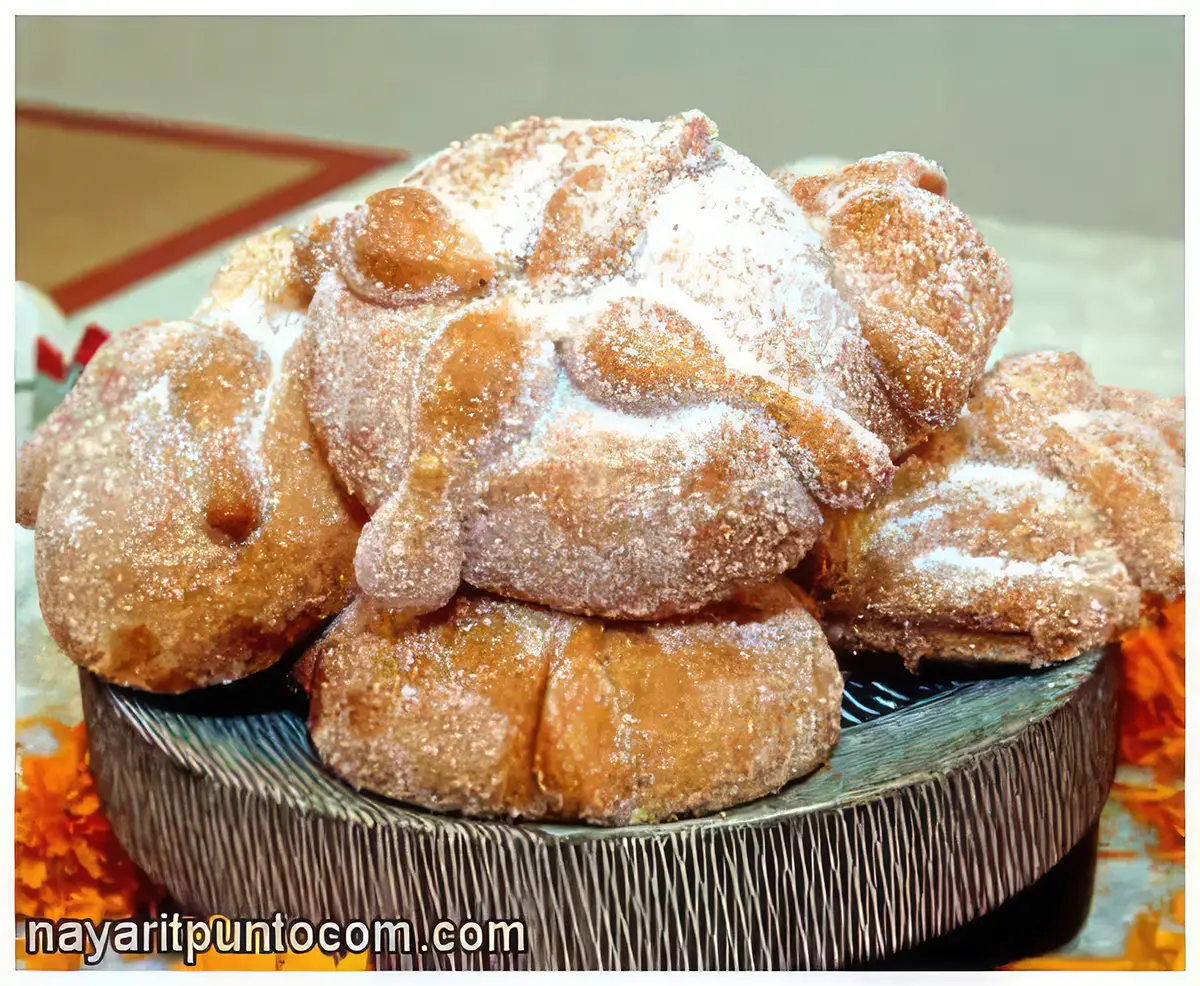
Then there is pan de muerto.
Soft. Golden. Sweet. Often dusted with sugar and decorated with dough shaped like bones, this seasonal bread is one of the great flavors of November. Pair it with café de olla or hot chocolate and you have an edible piece of the season’s collective purpose.
Puerto Vallarta: The Malecón Comes Alive
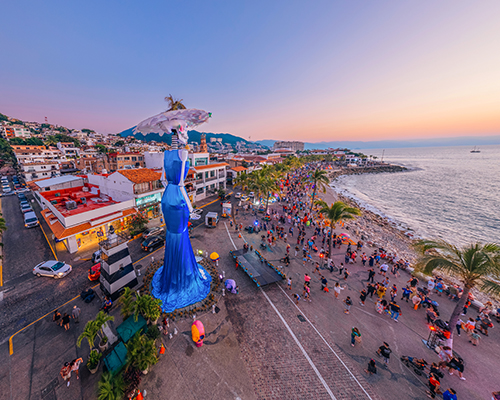
In Puerto Vallarta, the Malecón becomes the grand stage.
Around late October and the first days of November, the waterfront fills with public altars, monumental Catrinas, art installations, music, food, and cultural programming. The bay glimmers beside the celebration. The Sierra Madre rises behind it. Few places on the planet combine coastal beauty and Mexican tradition with this much energy.
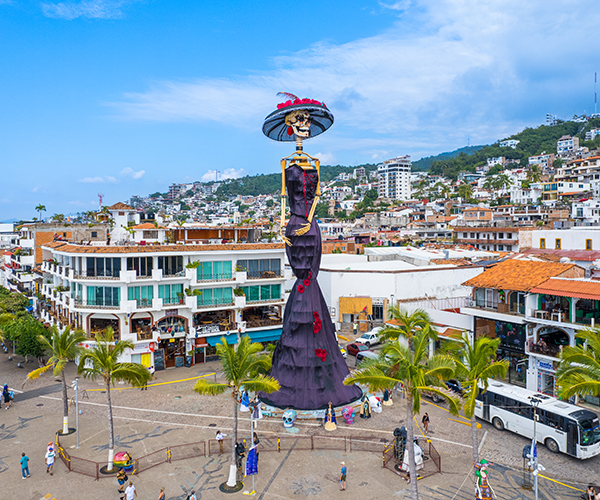
Start near the Malecón Lighthouse and walk slowly south. Look for the city’s famous monumental Catrina, whose elaborate costume changes from year to year. Along the promenade, giant calaveras and Catrinas create an open-air art exhibition.
Continue through downtown and keep your eyes open for altar displays near:
- The Main Plaza
- Los Arcos Amphitheater
- Isla Cuale
- Lázaro Cárdenas Park
- The City Hall area
- Markets, galleries, hotels, and neighborhood businesses
The official Puerto Vallarta Día de Muertos guide is a useful place to check for current exhibitions and public events. The schedule changes every year, so confirm dates and locations before you go.
Arrive before sunset. That is when the light turns honey-gold, candles begin to glow, and the Malecón starts to feel truly electric.
Wear comfortable shoes. Bring water. Leave room for pan de muerto.
Cemeteries: A More Intimate Tradition
The Malecón is colorful and public. Cemetery traditions are quieter and much more personal.
In the days before November 1 and 2, families may clean graves, repaint crosses, repair tombs, and decorate resting places with flowers. On November 2, loved ones often gather with candles, food, music, and stories.
Some families stay for hours. Some share a meal. Some bring mariachis. Some sit in silence.
This is where visitors must slow down.
A cemetery is not a backdrop. It is not a photo studio. It is a sacred place where families are remembering people they love.
If an organized cultural walk or guided visit is offered, that is the best way to learn. Otherwise, ask before entering. Follow local instructions. Keep your voice low. Never touch flowers, candles, photographs, food, or personal objects.
The most respectful souvenir is the memory of having witnessed something meaningful without taking over the moment.
Día de Muertos in Bucerías
Bucerías brings a smaller-scale, community-centered feeling to the season.
Look for decorations and altars around the town’s central areas, local businesses, markets, and church or plaza spaces. The atmosphere may be less monumental than downtown Puerto Vallarta, but that is precisely the appeal.
Take a walk. Buy something from a local vendor. Ask your hotel or a nearby shopkeeper what is happening that evening. Schedules may be shared by word of mouth, through neighborhood groups, or by local organizers.
Bucerías is one of the best stops for travelers who want to experience the warmth of Banderas Bay without staying inside the main tourist current.
Día de Muertos in La Cruz de Huanacaxtle
La Cruz has its own distinct rhythm: laid-back, creative, maritime, and proudly local.
During Día de Muertos, explore around the village center and ask about public altar displays, church activities, music, or community gatherings. Local restaurants, markets, galleries, and small businesses may add their own ofrendas.
Come with curiosity, not a checklist.
The most memorable moments may be simple: a family altar in a shop window, a row of candles near a plaza, a child carrying marigolds, or the scent of sweet bread drifting through the evening air.
Yelapa and Mismaloya: Quiet Beauty, Deep Feeling
Yelapa and Mismaloya offer a different kind of Día de Muertos experience.
These communities are surrounded by jungle, hills, beaches, and the deep blue energy of the Pacific. Celebrations may be intimate and family-led rather than heavily promoted. Public events can vary from year to year.
In Yelapa, ask your host, restaurant, or local guide whether an altar, procession, or community gathering is open to visitors. Keep your group small and your presence gentle.
In Mismaloya, check with local businesses and residents for appropriate places to observe. The village’s close-knit character is part of its charm, so do not assume every family altar is public.
These are wonderful places to discover Puerto Vallarta hidden gems, but Día de Muertos is not about hunting for secret content. It is about being invited into a culture with humility.
How to Observe Respectfully
A few simple choices make a huge difference.
Ask before photographing people
Always ask before photographing families, mourners, children, or anyone in Catrina makeup. A friendly, “¿Le puedo tomar una foto?” is a good start.
Do not touch the ofrendas
Admire the details. Do not rearrange flowers, move candles, handle food, or step across marigold paths.
Dress for the place
Bright colors and Catrina makeup are welcome at public festivals and parades. At cemeteries, choose comfortable, respectful clothing. Leave the oversized party props at home.
Keep cemeteries quiet
Silence your phone. Avoid flash photography. Do not eat, drink, or play music unless you are clearly part of an invited gathering.
Spend locally
Buy pan de muerto from a local bakery. Eat at a neighborhood restaurant. Support artisans, musicians, markets, and independent businesses. Celebration feels even better when your pesos strengthen the community hosting you.
Plan Ahead for November 1–2
Día de Muertos is one of the most special times to visit Puerto Vallarta and Banderas Bay. Hotels can fill early. Public programs may be announced close to the dates. Roads and walkways can become busy during parades and evening events.
Check the official Puerto Vallarta cultural festival information, confirm current event details, and ask locals for the latest updates.
Then explore beyond the headline attractions. Wander downtown. Visit the villages. Taste the bread. Follow the marigold glow.
And if you are thinking about moving to Puerto Vallarta, spend time here during Día de Muertos. You will see more than a beautiful destination. You will feel the strength of its neighborhoods, the warmth of its people, and the deep community spirit that makes life around Banderas Bay so magnetic.
¡Viva la vida! ¡Viva la memoria! And welcome to the most beautiful celebration on the bay.