
Whale Season 2026-27 Is Coming: When and Where to See Humpbacks in Banderas Bay (and Why You Should Book Early)

The countdown is on. The Pacific is warming. The bay is waiting.
From December 8, 2026, through March 23, 2027, humpback whales return to Banderas Bay. They arrive from northern feeding grounds ready to mate, calve, sing, breach, slap their tails, and turn an ordinary morning on the water into a full-body, jaw-dropping experience.
If whale watching is on your Puerto Vallarta wish list, now is the time to plan. The best boats, captains, guides, and private charters fill quickly: especially from mid-January through February.
So, buenos días, future whale watchers. Let’s get you ready.
Why Banderas Bay Is a World-Class Whale-Watching Destination
Banderas Bay is enormous. It stretches for roughly 62 miles, from the coastline near Punta Mita and the Marietas Islands in the north to Yelapa and Mismaloya in the south.
That scale matters.
The bay offers deep Pacific waters, sheltered coves, warm winter temperatures, and a long, dramatic coastline backed by the emerald Sierra Madre. Humpbacks come here because the conditions are ideal for breeding and raising calves. You come here because there is almost nowhere better to witness that wild, electric energy from a boat.
This is not a distant dot on the horizon kind of experience. One moment, the sea is glassy and blue. The next? A 40-foot whale launches into the sunlight. Splash. Thunder. Silence. Then the tail disappears.
Banderas Bay is also a living, working coastal community. Fishing villages, beach towns, marine guides, conservation groups, and local boat operators all share these waters. That community connection is part of what makes whale watching here so meaningful.
For more regional context, explore our guide to Banderas Bay’s coastline, beaches, wildlife, and communities.
When Is Whale Season in Banderas Bay?
The official regulated whale-watching season for the 2026-27 season is expected to run from:
- December 8, 2026, through March 23, 2027
- Best overall months: January and February
- Excellent quieter window: early to mid-March
Whales may occasionally be spotted outside the official season. However, authorized commercial whale-watching operations should follow the federal seasonal framework and current SEMARNAT requirements.
December: The Season Begins
Early December brings the first major wave of arrivals. Sightings can be excellent, but whale activity is still building.
You may see adult whales cruising through the bay, males competing for attention, and early mating behavior. There are often fewer boats than during the holiday rush, which can create a calmer, more spacious experience.
Late December gets busier. Christmas and New Year’s travelers arrive, and demand rises quickly.
January and February: Peak Whale Energy
This is the golden window.
January and February typically offer the highest concentration of whales and the greatest variety of behavior. Breaching. Pectoral-fin slaps. Tail throws. Spyhopping. Singing. Curious calves. Fast-moving competition pods.
You may also see mothers traveling with newborns. These pairs are unforgettable. The calf surfaces beside its mother, rests on her back, or practices tiny versions of enormous whale behaviors.
If you have only one chance to go whale watching in Banderas Bay, aim for mid-January through late February. Book early. Seriously.
March: Mother-and-Calf Magic
By March, some whales begin their migration north. Numbers may gradually thin, but the experience remains extraordinary.
Mother-and-calf pairs are often a major highlight. Calves are stronger now and may become more active at the surface as they prepare for the journey.
Early March can also bring a little more breathing room on the water. The season officially closes on March 23, so do not leave this experience until the final day if it is a priority.
What Will You See?
Every outing is different. That is the magic. Whales do not follow an itinerary, and they certainly do not check your travel schedule.
You might see:
- Humpbacks breaching completely out of the water
- Mothers and calves surfacing together
- Competitive groups of males pursuing a female
- Tail slaps and pectoral-fin slaps
- Slow, graceful dives
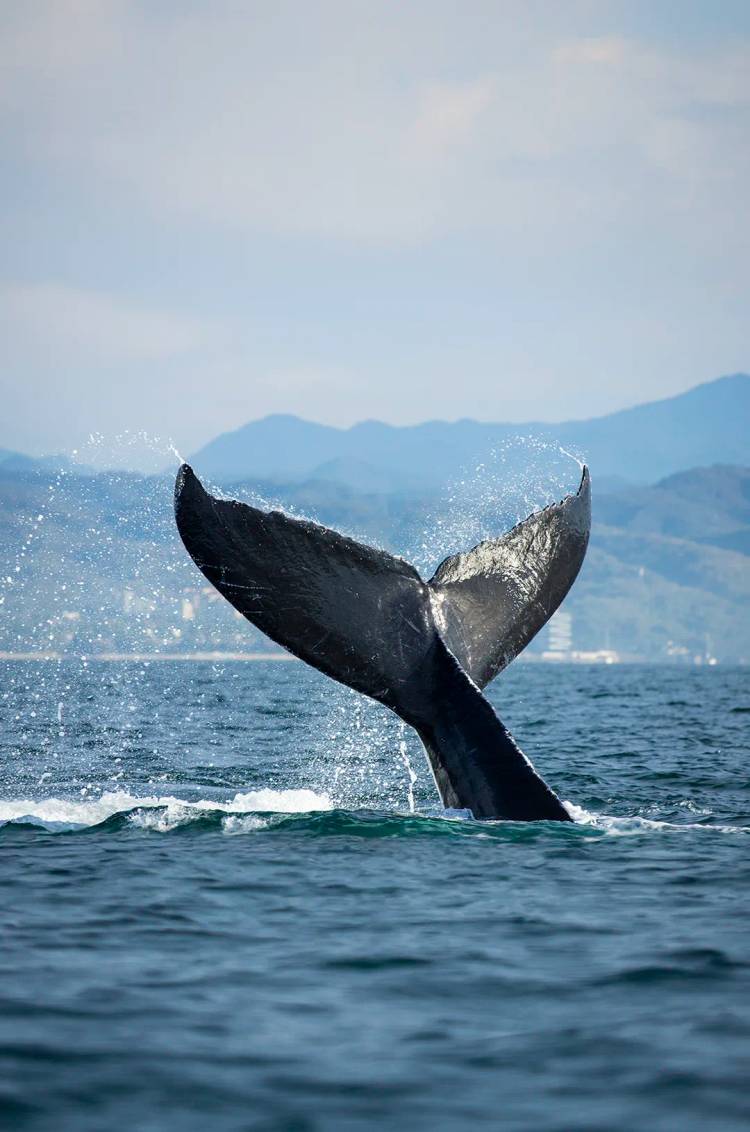
- Flukes rising against the mountains
- Whales singing underwater through a hydrophone
- Dolphins riding the wake
- Sea turtles, rays, and seabirds sharing the bay
Competition pods can be especially thrilling. Several males may move rapidly around one female, creating a swirl of spray, fins, and explosive movement. It is powerful. It is noisy. It is nature operating at maximum voltage.
Where Do the Whales Appear Around the Bay?
There is no single whale-watching spot. Humpbacks move constantly, and responsible captains follow the animals rather than forcing the animals to follow a route.
That said, common viewing areas include:
The Banderas Bay Marine Zone
The broad central bay between Puerto Vallarta and Punta Mita is a major winter corridor. Its deep water and open visibility make it a natural place to search for traveling whales.
Puerto Vallarta to Punta Mita
The corridor between these two destinations can produce spectacular sightings. It is also convenient for travelers staying in Puerto Vallarta, Nuevo Vallarta, Bucerías, La Cruz, or Punta Mita.
Off Yelapa and Las Ánimas
The southern coast is dramatic and rugged. Whales may appear offshore near Yelapa, Las Ánimas, Quimixto, and Majahuitas as they move along the coast.
Pairing a whale-watching outing with a scenic southern-coast cruise can be an unforgettable way to experience the bay. Just remember: whale watching must remain the priority. A responsible crew will not rush to a beach stop or chase wildlife to preserve a schedule.
Near the Marietas Islands
The Marietas sit near the northern mouth of the bay, where whales may pass between the islands, Punta Mita, and the open Pacific.
The area is also ecologically sensitive. The Marietas Islands are protected, and access rules can apply to landings, snorkeling, and Hidden Beach visits. Your captain should understand both marine-park requirements and whale-watching regulations.
Why a Private Yacht Charter Is the Best Way to Go
A standard tour can be wonderful. A private yacht or boat charter gives you something different: flexibility.
Want to leave early for calmer seas? You can. Want a quieter boat with your family, friends, or chosen family? Absolutely. Want to combine whale watching with a respectful cruise past Las Ánimas, Majahuitas, or Yelapa? Your captain can help shape the day.
A private luxury yacht charter in Puerto Vallarta also gives you more space for cameras, warm layers, snacks, and comfortable viewing. You can move around the deck without squeezing into a crowded row. You can pause. Listen. Breathe.
That is the real luxury. Not just polished teak and chilled drinks. Time. Space. Freedom.
For more ideas, browse our ultimate guide to yacht rentals in Puerto Vallarta or explore our local Luxury Yachts Mexico directory.
If you are searching for yacht charters puerto vallarta or yacht rentals in puerto vallarta, start now. January and February departures do not stay open forever.

How to Choose a Responsible Whale-Watching Operator
This part matters. A lot.
Choose an operator that:
- Uses licensed, authorized whale-watching guides
- Follows current SEMARNAT regulations and NOM-131-SEMARNAT-2010
- Displays the appropriate whale-watching identification or flag
- Uses a small boat or keeps group sizes manageable
- Maintains a respectful distance
- Never chases, surrounds, feeds, touches, or blocks whales
- Never promises swimming with humpbacks
- Gives whales the right of way
- Slows down and backs away if a whale changes direction or behavior
- Explains conservation rather than treating wildlife like a photo prop
With mothers and calves, the captain should be especially cautious. A good operator understands that the best encounter is not always the closest encounter.
Patience is part of the experience. The ocean sets the rhythm.
Practical Tips for Your Whale-Watching Day
Go in the morning
Morning departures often offer calmer water, softer light, and comfortable photography conditions. The sea can become breezier later in the day.
Prepare for motion
If you experience seasickness, take your preferred remedy before departure and follow medical guidance. Eat a light breakfast. Avoid arriving dehydrated or overly full.
Bring layers
Winter mornings can feel surprisingly cool on the water, especially on a moving boat. Pack a light jacket, long pants, closed-toe shoes, and a hat with a chin strap.
Protect your skin
The reflection off the water is intense. Bring reef-conscious sunscreen, sunglasses, and sun-protective clothing. Reapply sunscreen even when the breeze makes the air feel cool.
Protect your camera
Bring a dry bag or waterproof pouch. A phone can capture beautiful moments, but use burst mode or live photos. Whales do not pose. They erupt.
Why Conservation Protects the Bay: and the Experience
Banderas Bay is not simply a backdrop. It is a breeding and calving habitat for humpbacks, as well as a home for dolphins, sea turtles, manta rays, seabirds, and countless other marine species.
Whales face serious threats from entanglement, marine debris, vessel traffic, pollution, and habitat disruption. Responsible tourism helps create local support for cleaner water, safer navigation, protected areas, and rescue networks.
That is why regulations matter. They protect the whales. They protect passengers. They protect the future of the bay.
When you choose an ethical operator, your pesos support local captains, guides, crews, and conservation-minded businesses. That is travel with purpose. A better vibration. A shared commitment to this resilient coast.
Book Your 2026-27 Whale Adventure Now
Whale season is coming fast.
The official season runs roughly from December 8, 2026, through March 23, 2027, with the best odds of abundant activity in January and February. The boats with the best departure times and the most trusted guides will book first.
So gather your people. Choose your dates. Reserve your boat. Leave room in the itinerary for wonder.
Whether you join a small guided excursion or book a private yacht charter, get out on the water. Look toward the horizon. Listen for the blow.
Then, when a humpback breaches in the golden Pacific light, you will understand why this is one of the very best things to do in Banderas Bay.
¡Vámonos! The whales are on their way.